16 Oct 2026
Charting Security Compliance Effects on Fee Structures Within Hybrid Retail Payment Setups
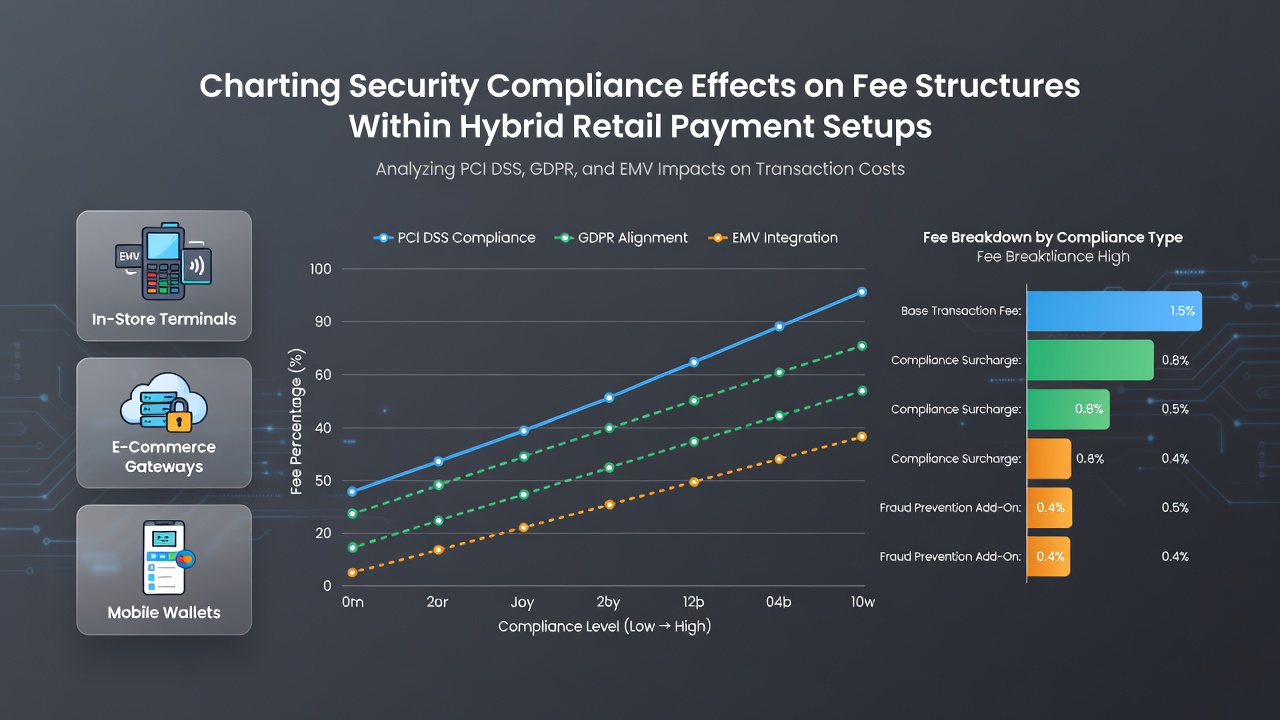
Hybrid retail payment setups combine physical terminals with digital checkout systems, and security compliance requirements shape the fee structures that merchants encounter in these environments, according to industry reports from 2025 onward. Payment processors adjust their pricing models when merchants must meet standards such as PCI DSS and emerging regional regulations, because certification processes and ongoing audits add operational layers that providers incorporate into transaction fees.
Core Compliance Elements in Hybrid Systems
Security protocols in hybrid setups demand encryption across both in-store hardware and online gateways, while tokenization protects card data during transfers between channels; these measures require specialized software updates and hardware certifications that vendors factor into their base pricing. Data from multiple payment networks shows that merchants operating in hybrid models often face layered fees, including a base processing rate plus an additional compliance surcharge that can range from 0.1% to 0.5% per transaction depending on the volume and risk profile.
Researchers at academic institutions have documented how end-to-end encryption and regular vulnerability scans increase the cost of maintaining dual environments, since each channel must undergo separate validation cycles. Those who've studied payment infrastructure note that hybrid retailers in regions following updated standards see these costs reflected in monthly statement fees as well as per-transaction charges.
Fee Adjustments Tied to Regulatory Timelines
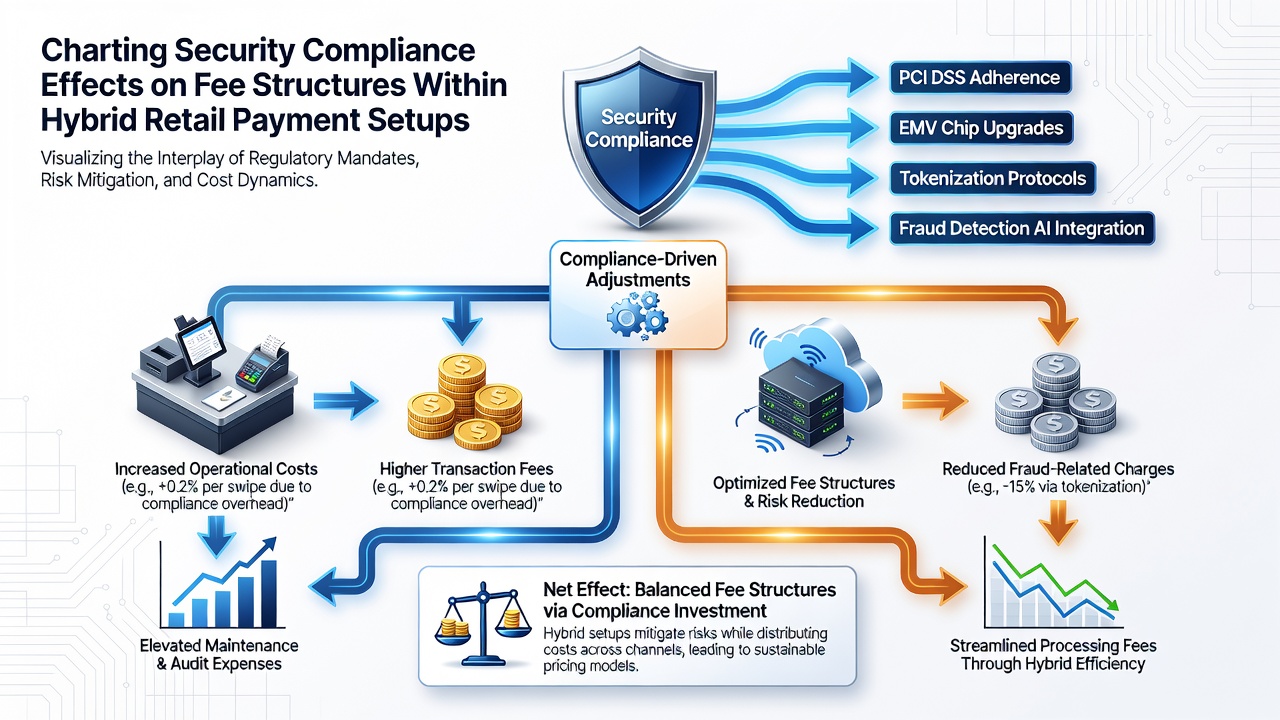
October 2026 marks the scheduled rollout of enhanced multi-factor authentication rules in several jurisdictions, and providers have already begun adjusting fee schedules to cover the infrastructure upgrades needed for compliance. Merchants who integrate new verification steps across both physical and virtual channels encounter higher setup costs that processors amortize through elevated discount rates over time.
Evidence from transaction data indicates that smaller hybrid operations experience steeper relative increases because they lack the negotiating power of larger chains, whereas high-volume retailers sometimes offset these through volume-based rebates. Observers note that compliance-driven fees often appear as separate line items on merchant statements, making it easier to track but harder to avoid when operating across channels.
Regional Variations in Cost Pass-Through
European frameworks such as the revised Payment Services Directive have prompted processors to introduce region-specific compliance add-ons that differ from North American models, according to analyses from the European Central Bank. Hybrid retailers expanding across borders encounter compounded fees when they must satisfy multiple overlapping standards simultaneously, because each additional certification layer adds verification overhead that providers build into their pricing.
Canadian regulatory updates and Australian consumer protection guidelines have similarly influenced fee structures, with data revealing that merchants in these markets pay distinct compliance premiums compared to purely domestic operations. Those monitoring industry trends point out that unified reporting tools can reduce some of these duplicated costs, yet adoption rates remain uneven across retail segments.
Impact on Transaction Volume and Pricing Models
Studies of hybrid payment adoption show that security compliance influences not only the per-transaction rate but also the structure of subscription or flat fees that processors charge for gateway access and terminal management. Merchants who maintain high compliance scores sometimes qualify for reduced rates, while those requiring remediation support see temporary fee uplifts until audits clear.
What's interesting is how risk-based pricing has evolved, with processors using real-time monitoring data to adjust fees dynamically based on detected vulnerabilities in either the physical or digital channel. This approach ties compliance performance directly to ongoing costs rather than one-time assessments.
Conclusion
Security compliance continues to reshape fee structures in hybrid retail payment environments through certification requirements, ongoing audits, and regional regulatory timelines such as those approaching in October 2026. Processors incorporate these expenses into transaction rates, monthly service charges, and risk premiums, creating measurable differences across merchant sizes and geographic locations. Data from regulatory bodies and research institutions demonstrates that hybrid operators must account for these layered costs when planning channel integration and long-term budgeting.