13 Nov 2026
Settlement Delays Across Multi-Processor Retail Networks and Their Influence on Inventory Replenishment for Scaling Merchants
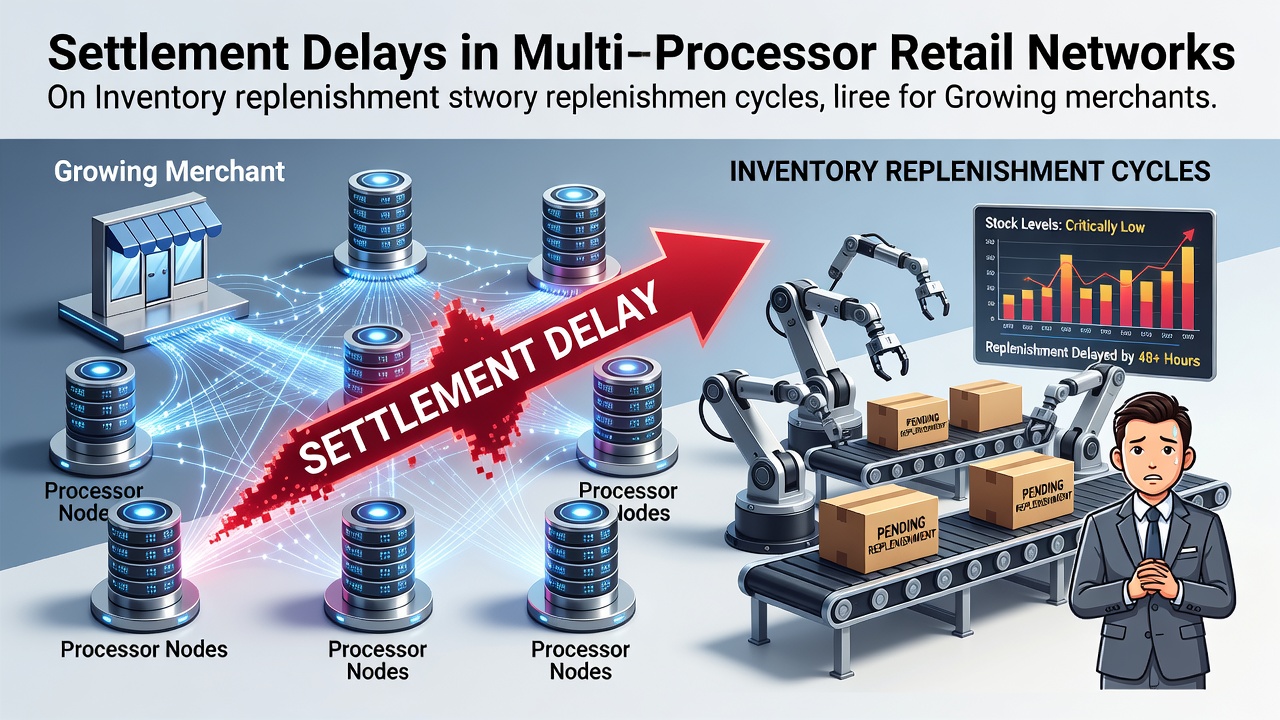
Payment settlement delays occur when funds from customer transactions move slowly through multiple processors before reaching merchant accounts, and these lags directly disrupt the timing of inventory orders for growing retailers. Merchants that rely on several processors to handle different sales channels often face staggered fund arrivals that complicate cash flow projections, which in turn affects decisions on restocking popular items. Data from payment industry analyses indicate that such delays can extend from two to five business days in networks using separate gateways for in-store and online volumes, creating gaps between revenue recognition and available capital.
How Multi-Processor Setups Create Timing Challenges
Retailers expand their processor relationships to manage higher transaction volumes, reduce risk through diversification, and accommodate regional payment preferences, yet this approach fragments settlement timelines. One processor might release funds on a T+1 basis while another operates on T+3, so daily reconciliation becomes a manual exercise that consumes staff hours and introduces errors. Observers note that growing merchants encounter these issues most acutely during peak seasons when sales spike and inventory turnover accelerates, because mismatched deposit dates prevent accurate forecasting of working capital.
Studies conducted by central banking authorities show that multi-processor environments increase the average settlement variance by up to 40 percent compared with single-provider arrangements. This variance forces inventory teams to either maintain larger safety stocks or risk stockouts when replenishment orders cannot be placed on schedule. Retailers in the United States, for example, have reported that delayed settlements during holiday periods in late 2025 carried forward into early 2026 planning cycles, leaving shelves understocked for spring promotions.
Direct Effects on Replenishment Cycles
Inventory replenishment relies on predictable cash inflows to trigger purchase orders with suppliers, and settlement delays break that predictability. When expected deposits arrive late, merchants either delay orders until funds clear or draw on credit lines that carry additional costs. Research from trade associations reveals that businesses experiencing repeated delays of three days or more extend their average replenishment cycle by 15 to 20 percent, which reduces product availability and can lower sales conversion rates in competitive categories.
Consider a mid-sized apparel retailer operating stores in multiple regions alongside an expanding online channel. That merchant routes credit card payments through one processor and digital wallet transactions through another. During November 2026, when seasonal demand rises, the staggered settlement windows create a cash shortfall that postpones fabric and finished-goods orders by nearly a week. Suppliers respond by extending lead times, which compounds the original delay and pushes the next replenishment cycle even further out.
Strategies Retailers Use to Mitigate Timing Gaps
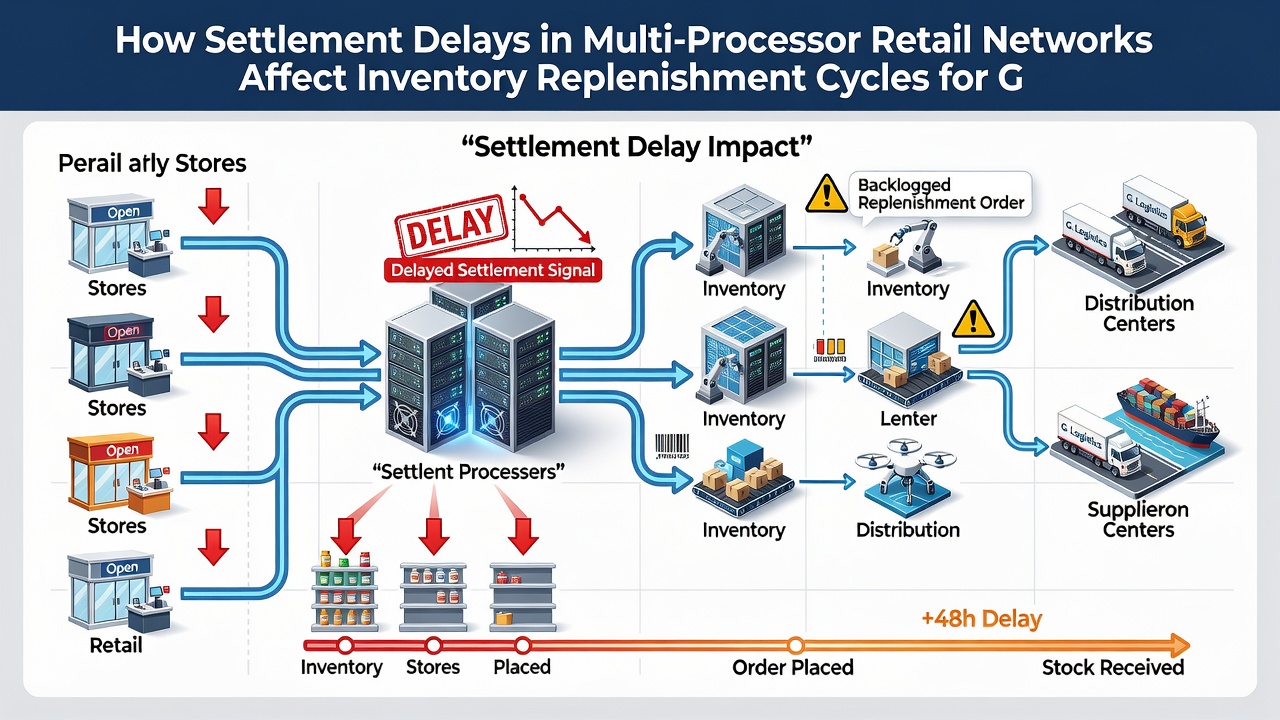
Merchants address these disruptions by implementing real-time visibility tools that aggregate expected settlements across processors and feed the data into inventory management software. Automated alerts notify procurement teams when projected deposits fall below thresholds, allowing earlier adjustments to order quantities or supplier negotiations. European Central Bank publications on retail payment infrastructures highlight that firms adopting such integrated dashboards reduce unplanned stockouts by measurable margins during high-volume periods.
Some retailers also negotiate shorter settlement windows with secondary processors or shift higher-volume channels to providers offering same-day funding options. These adjustments require upfront analysis of fee structures and processor reliability, yet they restore more consistent cash timing. Data from industry monitoring groups in Canada and Australia indicate that merchants who synchronize processor contracts with inventory calendars experience fewer disruptions in replenishment frequency throughout growth phases.
Broader Patterns Observed in Expanding Operations
As merchants scale, transaction volumes increase the absolute dollar impact of each settlement delay. A two-day lag on a $500,000 daily volume represents a million dollars in cumulative float over a month, money that cannot be deployed for new inventory or promotional buys. Academic papers on supply chain finance note that this float effect becomes more pronounced when multi-processor networks span different regulatory jurisdictions, because cross-border rules add extra verification steps that extend clearing times.
Retailers that track these patterns often build buffer reserves specifically calibrated to average settlement variances. They also diversify supplier payment terms to align with their own incoming cash cycles, requesting extended payables where possible. Such coordinated approaches keep replenishment cycles stable even when processor networks introduce variability.
Conclusion
Settlement delays in multi-processor retail networks create measurable friction in inventory replenishment cycles for growing merchants by introducing unpredictable gaps between sales and available capital. Retailers respond through visibility tools, contract adjustments, and reserve planning that realign cash timing with supply needs. Continued monitoring of payment infrastructure developments remains essential as transaction volumes rise and processor networks grow more complex.