30 Oct 2026
Tracing Encryption Mandates' Influence on Authorization Timelines Within Integrated Retail Payment Frameworks
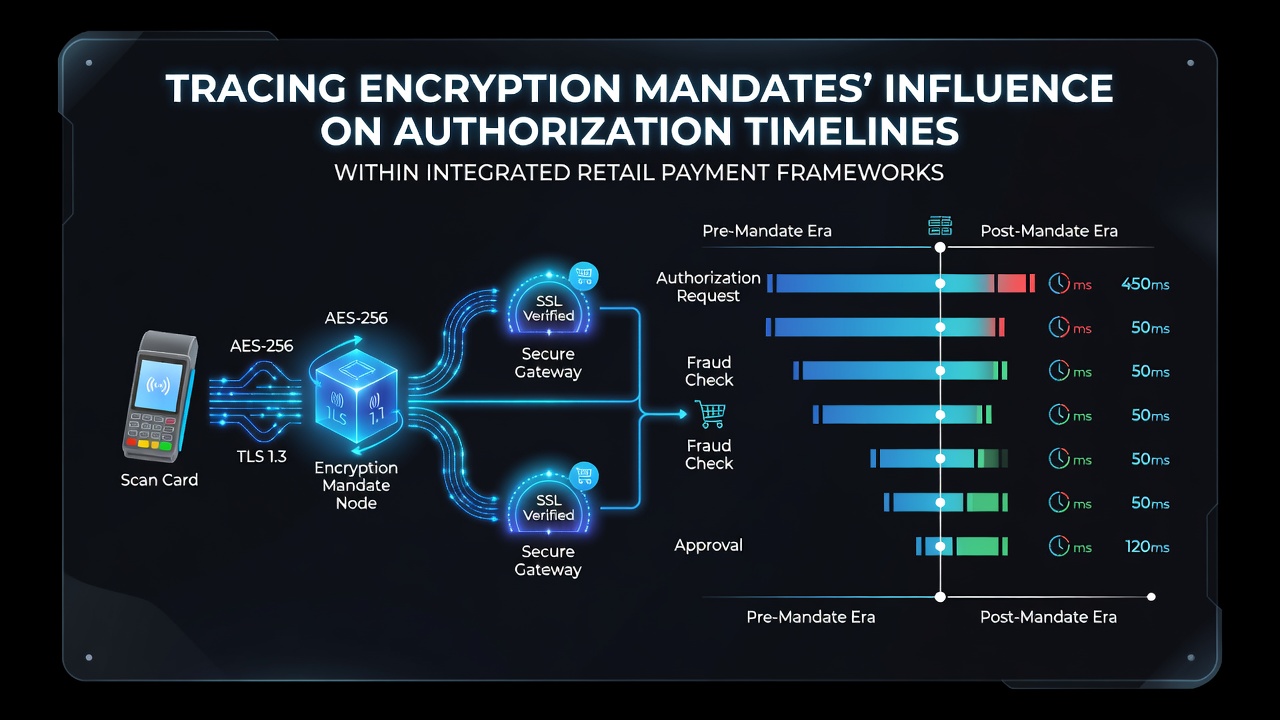
Encryption mandates in retail payment systems require specific cryptographic standards that add computational steps during transaction processing, and these requirements directly shape how long authorization takes in frameworks that combine physical terminals with digital checkouts. Retailers operating hybrid setups encounter these effects when data moves between point-of-sale devices and backend servers, where each encryption or decryption operation consumes processing cycles before a transaction can proceed to the next stage.
Regulatory Drivers Behind Encryption Requirements
Standards such as PCI DSS specify encryption protocols for cardholder data both in transit and at rest, while additional regional rules reinforce these measures. In the United States, guidance from the Consumer Financial Protection Bureau outlines expectations for secure data handling in payment networks, and the European Union enforces similar protections through directives that govern electronic payments across member states. Observers note that these layered requirements create consistent processing overhead regardless of whether a transaction originates at a physical terminal or through an online interface.
Data from industry reports indicate that encryption operations can extend authorization times by 50 to 200 milliseconds per transaction in integrated environments. This delay arises because systems must apply algorithms like AES-256 before routing requests to issuers, then validate responses upon return. Researchers at academic institutions studying payment infrastructure have documented how these steps accumulate when retailers synchronize logs from in-store devices with cloud-based authorization services.
Impact on Authorization Timelines in Hybrid Retail Setups
Integrated retail payment frameworks route transactions through shared gateways that handle both card-present and card-not-present scenarios, yet encryption mandates apply uniformly across both paths. When a customer pays at a terminal, the device encrypts the card details before transmission, and the same process occurs for online checkouts where browsers or mobile apps perform the encryption. This uniformity means authorization timelines reflect the cumulative effect of encryption at every hop rather than varying significantly by channel.
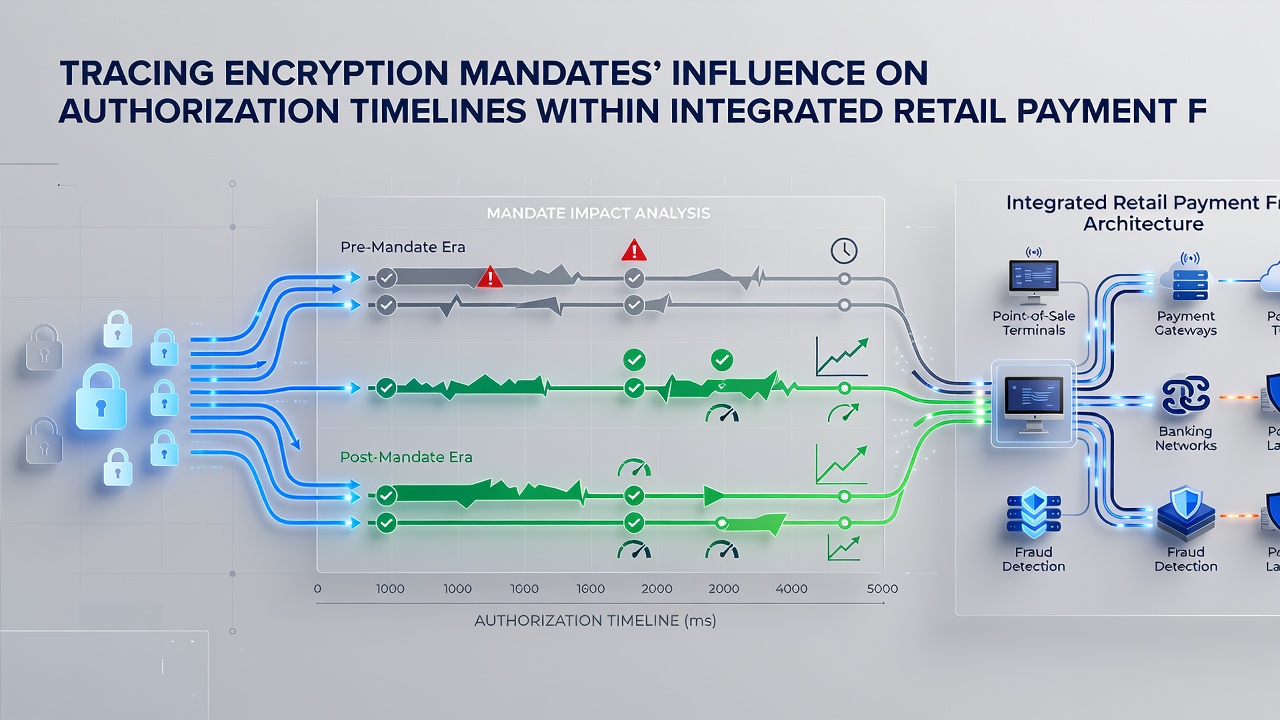
Studies from research institutions show that peak-hour volumes amplify these delays, as servers allocate resources to cryptographic tasks alongside other validation functions. In October 2026, updates to certain technical specifications are scheduled to take effect, requiring additional key rotation procedures that will insert further verification points into the authorization sequence. Those who manage retail payment operations have adjusted their infrastructure accordingly, often by deploying hardware security modules that offload encryption work from general-purpose processors.
Technical Adjustments and Measured Outcomes
Payment processors have responded by optimizing software stacks to reduce the latency introduced by encryption routines, while hardware vendors supply chips designed for rapid cryptographic calculations. Figures released by trade organizations reveal that retailers adopting these specialized components report authorization times stabilizing within acceptable ranges even after mandate updates. Yet the integration of physical and virtual systems continues to demand careful sequencing so that encrypted data streams remain synchronized across both environments.
One study conducted by a Canadian university examined transaction logs from mid-sized retail chains and found that encryption-related pauses accounted for roughly 12 percent of total authorization duration in hybrid setups. Similar patterns appear in reports covering Australian payment networks, where comparable regulatory expectations apply. These measurements help operators predict how future mandate changes will affect customer wait times at checkout.
Conclusion
Encryption mandates shape authorization timelines by introducing mandatory computational steps that integrated retail payment frameworks must accommodate. Data from regulatory bodies and academic sources demonstrate consistent effects across regions, and preparations for October 2026 updates continue to influence infrastructure decisions. Retail operators track these timelines through performance metrics that isolate encryption overhead from other processing factors, allowing them to maintain service levels while meeting security obligations.